General

Somnath Temple, Gujarat

Prabhas Patan, near Veraval, Gujarat , Gujarat Deity: Lord Shiva
Acharya Meera
Acharya Meera (Verified Astrologer) August 31, 2026
Read in:

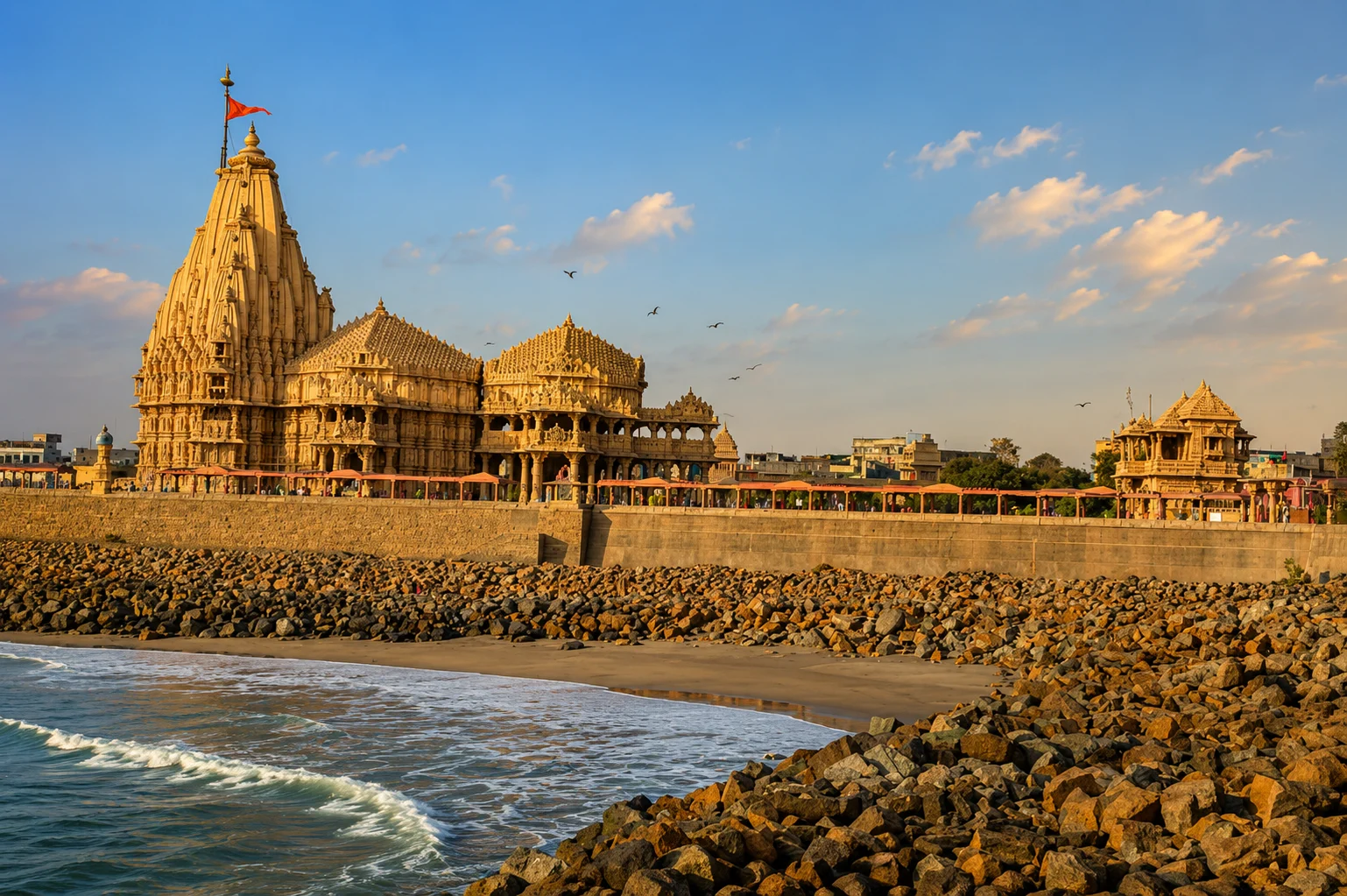
Standing beside the Arabian Sea in Gujarat, Somnath Temple is one of the most famous Shiva temples in India. With the sound of sea waves in the background and centuries of history connected to its name, Somnath is a place where spirituality and history come together.

For devotees, Somnath is much more than a beautiful temple. It is one of the 12 Jyotirlingas of Lord Shiva, making it one of the most important pilgrimage destinations for Shiva devotees across India.

The temple has been destroyed and rebuilt several times throughout history, but its story is often remembered as a symbol of faith, strength and reconstruction.

Somnath Temple – Quick Details

Information Details
Temple Name Somnath Temple
Location Prabhas Patan, near Veraval, Gujarat
State Gujarat
Main Deity Lord Shiva
Deity Form Somnath Jyotirlinga
Religion Hinduism
Temple Tradition Shaivism
Nearby Sea Arabian Sea
Famous For One of the 12 Jyotirlingas
Temple Trust Shree Somnath Trust

History & Significance

The history of Somnath Temple is one of the most fascinating temple stories in India.

According to Hindu tradition, the temple is associated with Chandra, the Moon God, who is believed to have worshipped Lord Shiva here. The name "Somnath" is commonly understood as "Lord of the Moon" or "Lord of Soma."

The temple has been an important pilgrimage centre for centuries. Historical accounts record repeated attacks and destruction of the temple during different periods of India's medieval history.

One of the most famous historical references is the raid by Mahmud of Ghazni in 1025–26 CE. The temple was subsequently rebuilt on different occasions.

The modern reconstruction of Somnath became an important chapter in India's post-independence history. Sardar Vallabhbhai Patel played a major role in supporting the reconstruction of the temple after India's independence.

The present temple was built in the Chalukya style of Hindu temple architecture, giving it a distinctive and grand appearance overlooking the Arabian Sea.

The temple's reconstruction is often seen as a symbol of cultural revival and determination.

Additional Information

Where Is Somnath Temple Located?

Somnath Temple is located at Prabhas Patan near Veraval in Gir Somnath district, Gujarat, India.

The temple stands close to the Arabian Sea, giving visitors a spectacular view of the coastline.

Its location is one of the things that makes Somnath different from many other major temples in India. After visiting the temple, devotees can stand near the sea and enjoy the peaceful atmosphere around the temple complex.

Somnath is also connected with several other religious and historical places in the Prabhas Patan region, making it an important destination for pilgrimage tourism in Gujarat.

Who Is the Main Deity of Somnath Temple?

The main deity of Somnath Temple is Lord Shiva, worshipped in the form of the Somnath Jyotirlinga.

Somnath is traditionally regarded as the first among the 12 Jyotirlingas.

The word "Jyotirlinga" refers to a sacred manifestation of Lord Shiva. For devotees, visiting a Jyotirlinga is considered an important spiritual pilgrimage.

The name Somnath is connected with the ancient story of Chandra, the Moon God, who is believed to have worshipped Lord Shiva at this sacred place.

Why Is Somnath Temple So Famous?

There are several reasons why Somnath Temple is famous across India.

The first is its status as one of the 12 Jyotirlingas. This alone makes it an important destination for Shiva devotees.

The second is its remarkable history. Somnath has faced destruction and reconstruction multiple times, yet the temple tradition continued.

The third is its location. The temple stands beside the Arabian Sea, creating a beautiful combination of spirituality and nature.

The fourth is its connection with India's modern history. The reconstruction of Somnath after independence became an important symbol of cultural and religious heritage.

Together, these elements make Somnath one of the most recognisable temples in Gujarat.

Architecture of Somnath Temple

The present Somnath Temple is built in the Chalukya style of temple architecture.

Its tall shikhara can be seen rising above the temple complex, while intricate architectural details reflect the traditional craftsmanship of western India.

One of the most interesting features of the temple is its location directly facing the Arabian Sea.

The combination of the traditional temple structure, open coastline and sound of the waves creates a memorable atmosphere for visitors.

The Spiritual Experience at Somnath

A visit to Somnath can feel very peaceful.

Imagine standing inside the temple after travelling a long distance, hearing the sound of bells and devotional chants, and then walking outside to see the Arabian Sea stretching towards the horizon.

For many devotees, the experience is deeply personal.

Some visit to pray for their families, some come as part of a Jyotirlinga pilgrimage, while others visit to experience the history and spiritual atmosphere of the place.

The temple also conducts daily religious rituals and aarti, allowing visitors to experience traditional Hindu worship.

Somnath and the Legend of Chandra

One of the most famous stories associated with Somnath comes from Hindu mythology.

According to tradition, Chandra, the Moon God, married the 27 daughters of Daksha Prajapati. However, he was especially attached to Rohini, which angered Daksha.

Daksha is said to have cursed Chandra, causing him to lose his brightness. Chandra then worshipped Lord Shiva at Prabhas and prayed for relief.

Lord Shiva eventually blessed him, and Chandra regained his brightness.

Because of this association with the Moon God, Lord Shiva came to be worshipped here as Somnath.

This story is an important part of the temple's religious identity and is one reason why the name Somnath has such a strong connection with Hindu mythology.

Festivals at Somnath Temple

Several Hindu festivals are celebrated at Somnath throughout the year.

Mahashivratri is one of the most important occasions, when large numbers of Shiva devotees visit the temple.

The month of Shravan is also considered especially sacred for Lord Shiva. During this period, devotees perform special prayers and offer traditional items to Shiva.

Other Hindu festivals and religious occasions are also observed at the temple with traditional rituals.

Final Thoughts

Somnath Temple is a place where India's mythology, history, architecture and faith come together.

Its story is not only about an ancient temple. It is also about rebuilding, devotion and the ability of a sacred tradition to continue through difficult periods.

Standing beside the Arabian Sea, the temple creates a powerful atmosphere that visitors remember for a long time. Whether you are travelling as a Shiva devotee, exploring the 12 Jyotirlingas, or discovering the religious heritage of Gujarat, Somnath is a destination worth experiencing.

For many pilgrims, the journey to Somnath is ultimately about one simple thing — seeking the blessings of Lord Shiva at one of India's most sacred Jyotirlingas.

Acharya Meera - Business & Wealth Expert
Written & Verified by Acharya Meera

Business & Wealth Expert • 6+

Specialist in Vedic astrology, birth chart analysis, and remedies on AstroZiva.

Consult with Acharya Meera

Frequently Asked Questions

1. Where is Somnath Temple located?

Somnath Temple is located at Prabhas Patan near Veraval in Gir Somnath district, Gujarat, India. The temple stands beside the Arabian Sea.

2. Who is the main deity of Somnath Temple?

The main deity is Lord Shiva, worshipped as the Somnath Jyotirlinga.

3. Why is Somnath Temple famous?

Somnath is famous for being one of the 12 Jyotirlingas of Lord Shiva. It is also known for its long history of destruction and reconstruction and its beautiful location beside the Arabian Sea.

4. What does the name Somnath mean?

The name Somnath is commonly understood as "Lord of the Moon." According to Hindu tradition, Chandra, the Moon God, worshipped Lord Shiva at this sacred place.