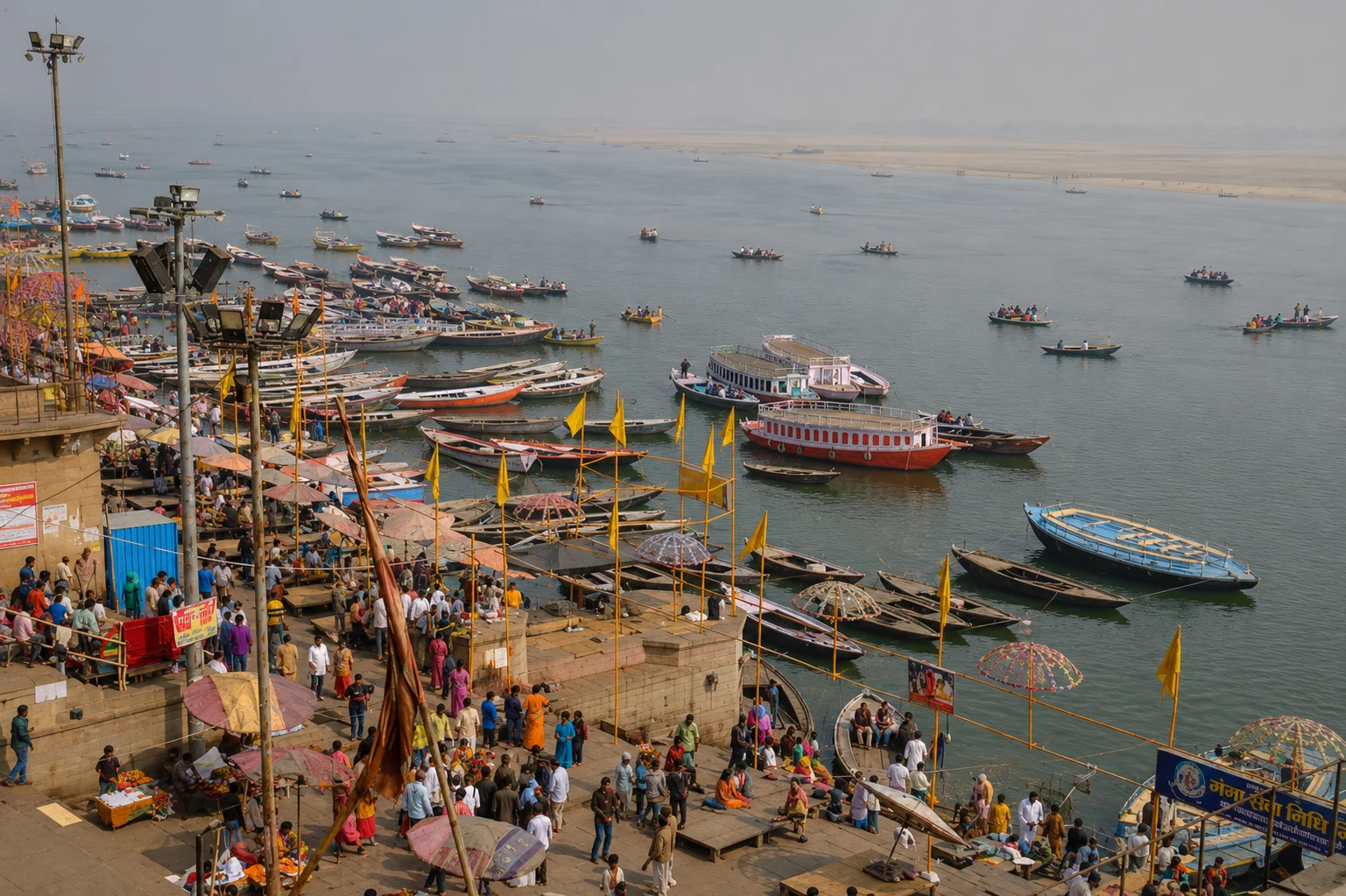
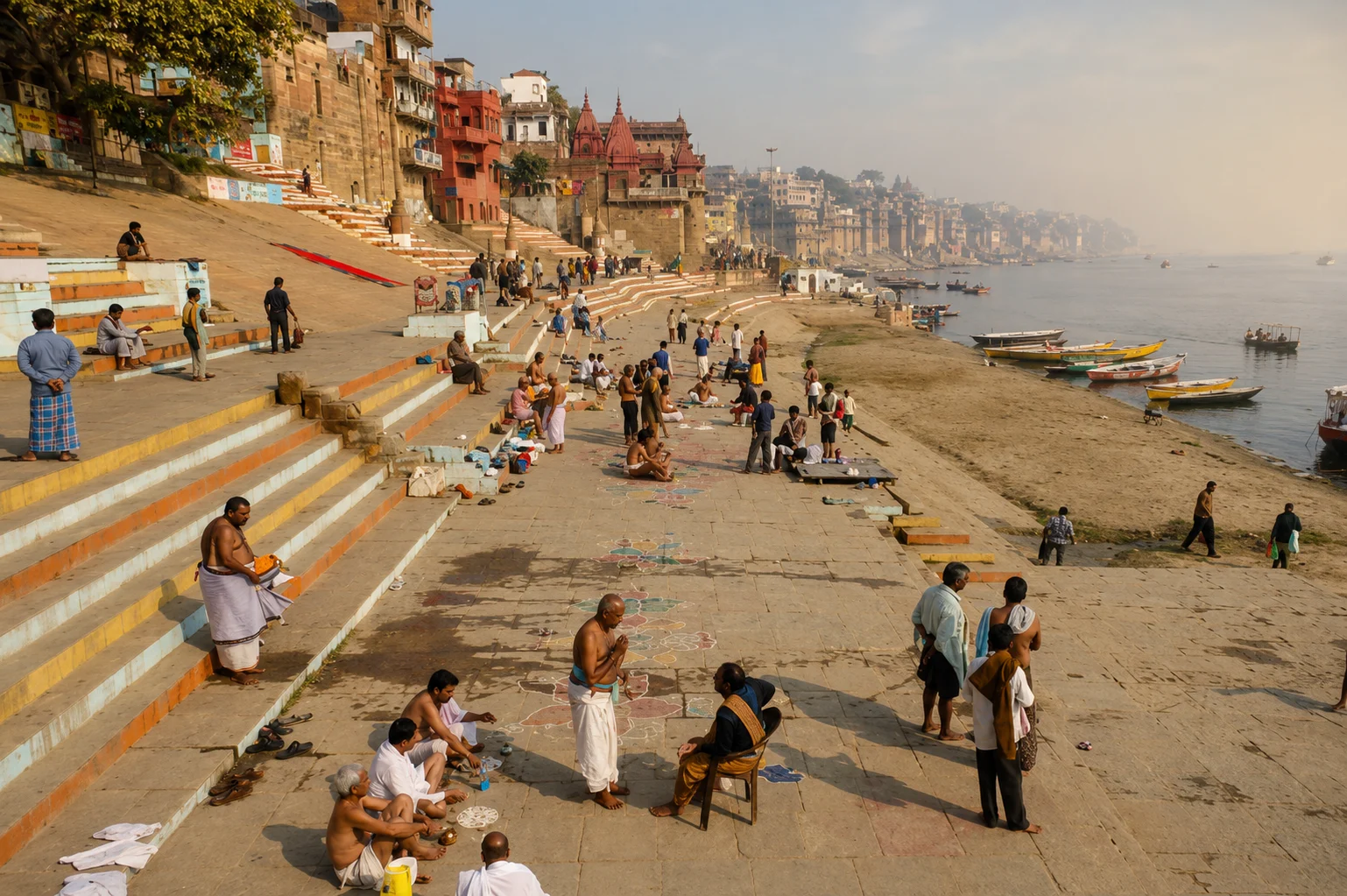
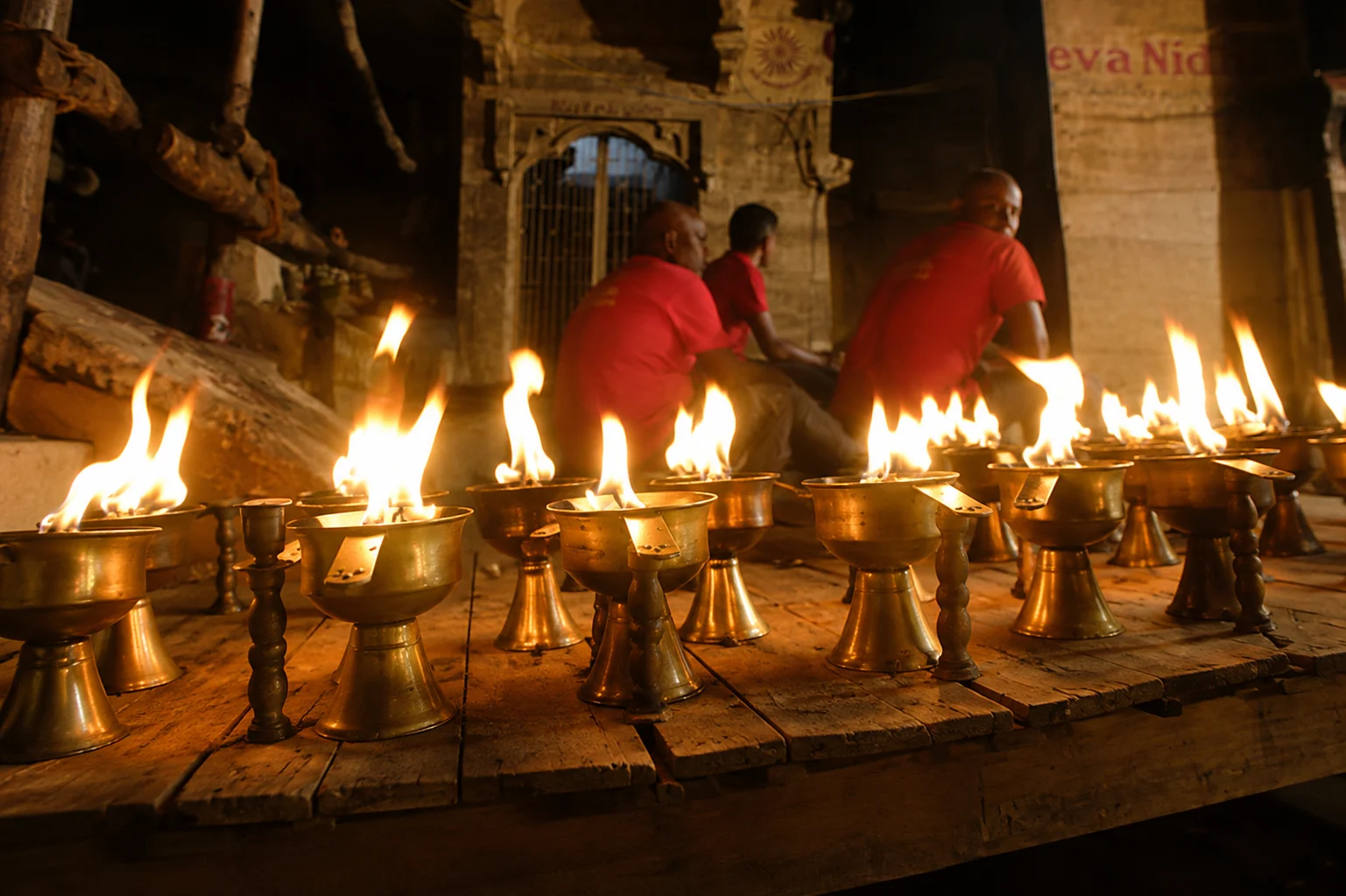
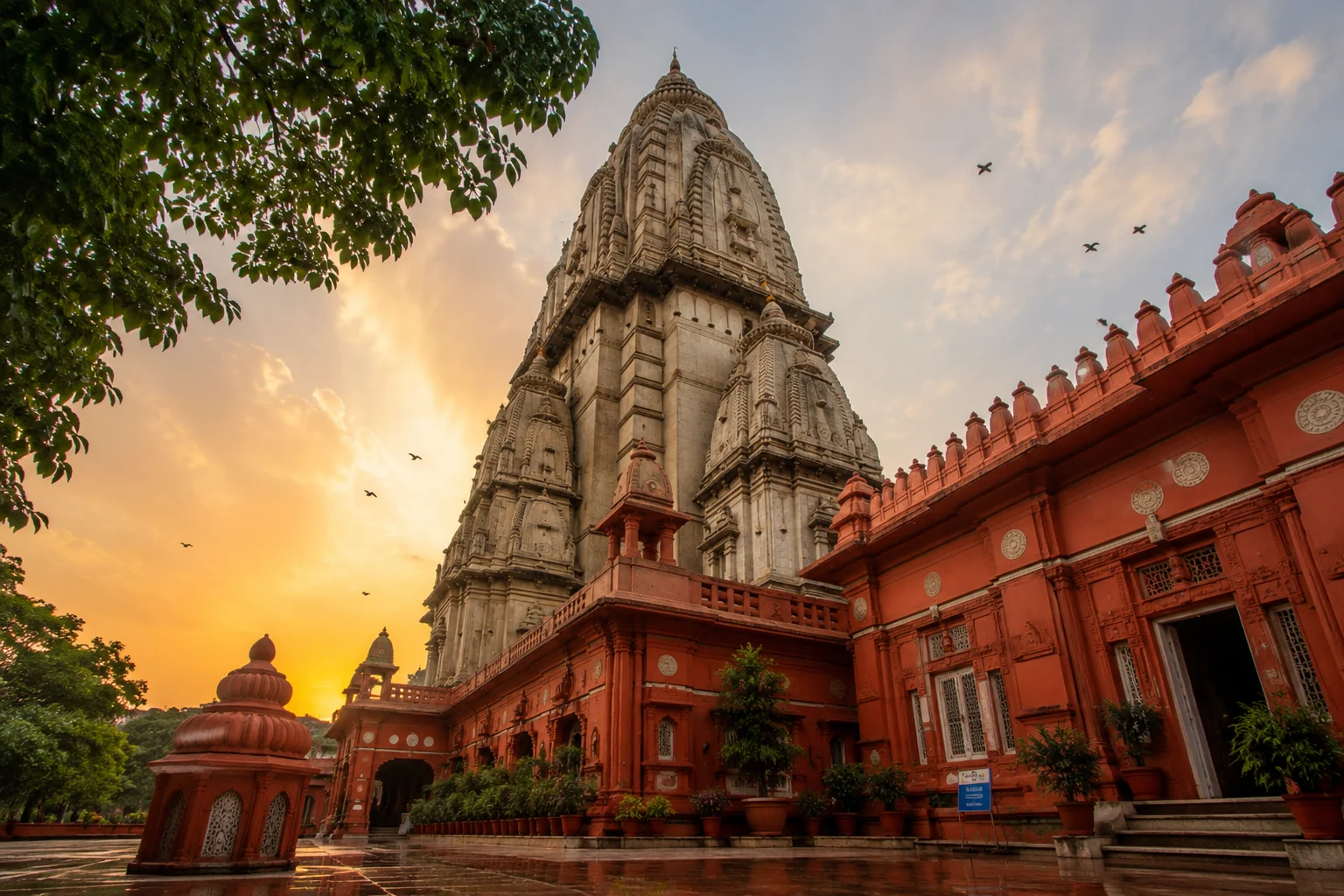
In the heart of Varanasi, beside the sacred River Ganga, stands one of India's most revered temples — Shri Kashi Vishwanath Temple. For thousands of years, Kashi has been known as a spiritual centre of India, and the Kashi Vishwanath Temple is at the centre of this sacred city.
For devotees of Lord Shiva, visiting Kashi is not simply a religious trip. It is an emotional and spiritual journey. Many people believe that taking darshan of Lord Vishwanath in Kashi is a blessing that cannot be compared with an ordinary temple visit.
Shri Kashi Vishwanath Temple – Quick Details
| Information |
Details |
| Temple Name |
Shri Kashi Vishwanath Temple |
| Popular Name |
Kashi Vishwanath Temple |
| Location |
Varanasi, Uttar Pradesh, India |
| State |
Uttar Pradesh |
| Main Deity |
Lord Shiva |
| Deity Form |
Vishwanath Jyotirlinga |
| Religion |
Hinduism |
| City |
Varanasi / Kashi |
| River Nearby |
River Ganga |
| Famous For |
One of the 12 Jyotirlingas |
History & Significance
The history of Kashi Vishwanath Temple is deeply connected with the ancient city of Kashi, traditionally considered one of the oldest continuously inhabited cities in the world.
According to Hindu beliefs, Kashi is the sacred city of Lord Shiva. The name Vishwanath means "Lord of the Universe", which is one of the names of Lord Shiva.
The temple has experienced several periods of destruction and reconstruction throughout history. The present temple structure is generally associated with the 18th-century reconstruction carried out under the patronage of Ahilyabai Holkar, the Maratha queen of Indore, in 1780.
Later, the temple received further additions and patronage. The temple's famous gold-plated domes are associated with the contribution of Maharaja Ranjit Singh in the 19th century.
Over time, Kashi Vishwanath became one of the most important pilgrimage centres for devotees of Lord Shiva.
In recent years, the temple area has also undergone major redevelopment. The Kashi Vishwanath Dham Corridor has created a much wider and more accessible connection between the temple and the Ganga ghats, making it easier for pilgrims to visit the temple and the riverfront together.